
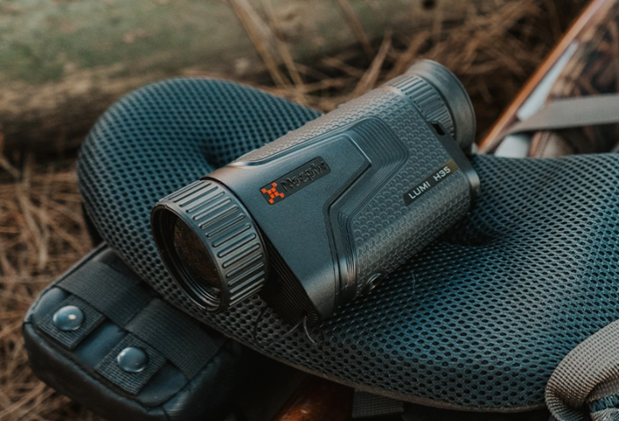
In addition to thermal rifle scopes, here at Dark Night Outdoors we also carry a number of thermal monoculars and binoculars from the top brands such as PULSAR and Nocpix. This short post will break down some of the most common questions routinely asked about them.
How far can thermal monoculars see?
That depends on the detection range of the device, and each thermal optic has a specific detection range. For instance, the iRay RH25 V2 thermal monocular has a detection range of 1375 yards, which is basically the limit on how far it can “see.” However, that does not mean that you will be able to make a positive identification at that range, only that the monocular can pick up thermal radiation at that range.
What is sensor resolution?
Sensor resolution is basically the number of pixels that a sensor contains. Just like a digital camera, more pixels results in a higher resolution and this is one of the primary determinants of image quality and clarity in a thermal optic, whether it’s a scope, a monocular, or binoculars.
What besides sensor resolution impacts image clarity?
Sensor resolution is not the only thing that impacts image clarity. In addition, frame rate, pixel pitch and NETD rating also impact image clarity. A higher frame rate will result in less lag, a lower pixel pitch will increase clarity, and lower NETD rating will help the sensor pick up on smaller thermal differentials, resulting in a clearer sight picture.
In addition, if the thermal optic in question has any special image processing software that helps reduce noise, the image clarity will be higher as well.
Can thermal monoculars see through fog, mist or rain?
Water absorbs thermal radiation, so it is very difficult to see through rain. The same goes for heavy fog and mist; however, light fog and mist will still allow thermal radiation to pass through, though it may bring down the image clarity slightly.
Are thermal monoculars better than binoculars?
That really depends on what you are looking for. Neither is inherently better than the other. Some of the advantages of thermal monoculars are that:
- They tend to be more cost-effective than binoculars.
- They are lighter and smaller and have more compact footprints than binoculars.
- Monoculars only require you to use one eye which can preserve your night vision in the other eye.
- Some monoculars can double as clip-on thermal optics, converting your glass rifle scope into a thermal optic without the need to re-zero.
As for thermal binoculars, some advantages of these are that:
- Form factor is familiar and some people prefer the ergonomics of binoculars over thermal monoculars.
- They let you use both eyes which can help reduce strain and headaches.
Again, though, none of this is to suggest that either monoculars or binoculars are better than the other.
Are IR/night vision or thermal monoculars better?
IR and thermal monoculars are fundamentally different in how they work. Neither is necessarily better than the other, but thermal has some significant advantages over IR. IR, or night vision, simply amplifies visual light. The obvious issue here is the darker it is, the less effective IR is. The other thing is that both optical and physical camouflage will make it difficult or impossible to spot what you’re stalking, just as it would during the day.
With thermal optics, you can see even in complete darkness, and it is impossible for optical camouflage to hide a thermal target because the thermal radiation gives it away. While physical cover (like leaf cover) can diminish the vibrancy of a thermal target, oftentimes it will still cut through and the target will remain visible.
Ultimately, as stated, neither is better than the other. It’s just about what you’re looking for.
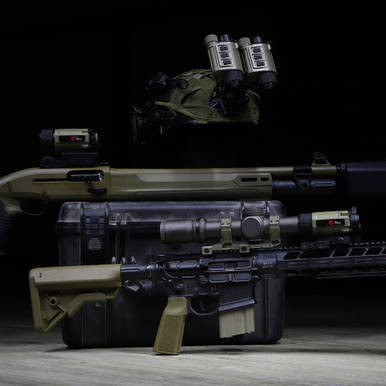
Are thermal monoculars better?
Not necessarily, but they are more affordable than thermal binoculars as a general rule and they tend to be lighter and smaller. Some can also double as clip-on thermal optics for use with a glass scope.
Is a laser rangefinder worth it?
That depends on if you need it. If you are simply scanning to identify targets with a thermal monocular or binoculars, not necessarily. But if you are a hunter and need to accurately estimate ranges for executing a shot, then an LRF can be highly valuable, especially when paired with a ballistic calculator, which many thermal optics also offer.
Can you use thermal optics during the day?
Thermal optics will work during the day just as well as at night, since they do not detect visible light, but thermal radiation.
Shop Thermal Monoculars and Binoculars Here
Thinking you want to supplement the performance of your thermal scope with a thermal monocular or a pair of binoculars? Shop our collection and if you have any questions before you buy, or would like personalized recommendations, get in touch with us at 309-781-8421.
