
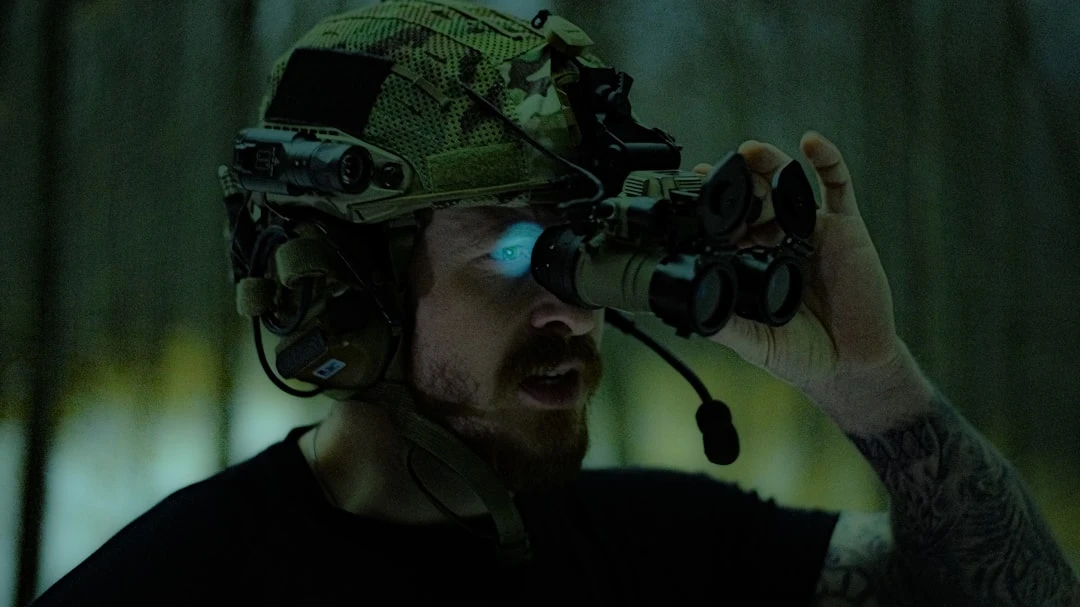
Here at Dark Night Outdoors, we specialize in thermal imaging: thermal scopes, monoculars, binoculars, clip-ons, and other optics that “see” heat and work in complete darkness. These optics are invaluable for night hunters as they enable them to pursue their quarry even under the most inhospitable of conditions, and in the dead of night.
Some optics, however, like the Nocpix MINI 2 H25, which are relatively new, change the game by delivering an uncommon degree of versatility. Namely, in this case, this thermal monocular is equipped not just with thermal imaging capabilities, but with night vision.
These two things do not work in exactly the same way and they certainly don’t offer the same exact performance. So let’s take a closer look at the differences between thermal imaging and night vision so you can get a better understanding of why each is valuable, and why a scope that offers both is even better than one that only offers one versus the other.
How Thermal Imaging Works
Thermal imaging works in a very different way from how night vision works, although both utilize electromagnetic radiation to assemble an image. Most thermal imaging devices are “FLIR” or “forward-looking infrared” devices that have a sensor that is able to detect thermal radiation, also known as infrared radiation, or simply as heat.
In other words, these sensors can literally “see” heat. Infrared radiation, like visible light, is part of the electromagnetic spectrum, but it is not visible to the naked eye and it takes a special sensor to be able to detect it. A normal optical camera cannot pick up on infrared. Only a thermal imaging device can.
It is also important to note here that thermal imaging devices don’t just see heat; they are able to see differentials in heat, which is why NETD rating is so important. Without sensitivity to thermal differentials, you would just get a big “blob” on the display in the rough outline of a target. But, with an advanced sensor that is very sensitive to small differences in temperature, the sensor is able to assemble a very detailed sight picture on the display.
Because thermal imaging does not rely on light on the visible spectrum at all, it works in complete darkness. Even in situations in which there is no moonlight or starlight, a thermal optic will work just fine.
That being said, if there is heavy smoke, fog, or precipitation, a thermal optic’s performance will not be as sound as it would be under optimal, clear conditions. Even so, the performance of most thermal imaging optics under adverse environmental conditions will still exceed that of comparable night vision optics.
It is also the case that most thermal imaging optics like monoculars and thermal rifle scopes offer superior detection ranges when compared to night vision optics. Some can even detect heat signatures close to a mile away.
How Night Vision Works
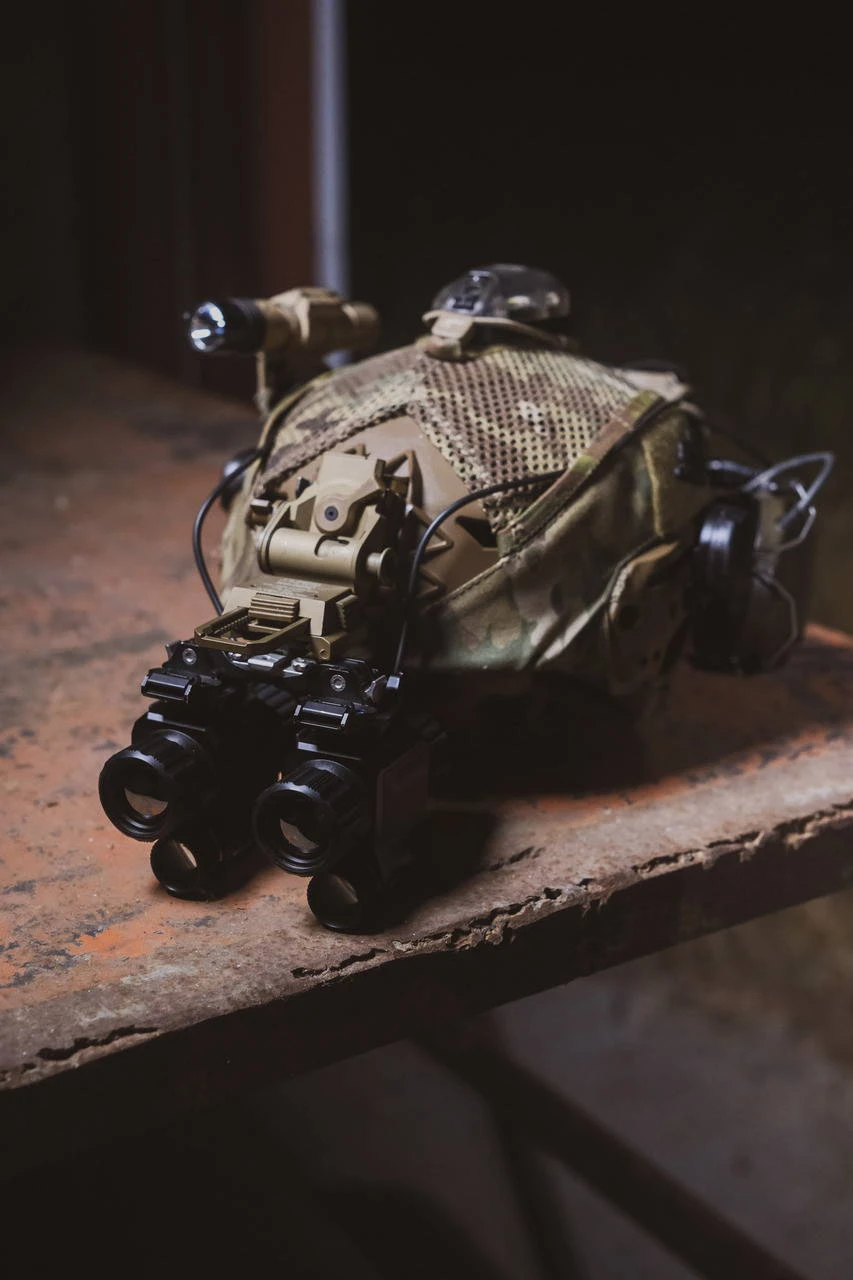
In contrast to thermal imaging, night vision works effectively by amplifying existing ambient light. It could be ambient artificial light, starlight, or moonlight, but there needs to be some ambient light in order for a night vision optic to operate.
In a night vision optic, light is collected through a lens and then passed through something called an IIT, or “image intensifier tube” or else to a CMOS sensor, then displayed as a digital sight picture on a display.
Night vision technology is often classified according to “generation.” Generation 1 night vision optics are relatively affordable but offer only basic amplification and deliver only limited resolution and detection ranges.
Generation 2 night vision optics offer better sensitivity and detection ranges and produce generally clearer sight pictures. As for Generation 3 night vision optics, they are the highest-performance of the group; they are military-grade and produce high-clarity, low-noise target pictures.
Now, because night vision optics need some ambient light in order to operate, they actually don’t work in total darkness, unlike thermal optics. For this reason, many are paired with “IR illuminators” which are basically “invisible flashlights” that project a flood of IR light that the night vision sensor can then pick up on so that it can produce a sight picture.
There are also some limitations of night vision optics that should be addressed here. In addition to the fact that they do not work in complete darkness, the performance of a night vision optic will be severely diminished in the presence of heavy rain, smoke or fog, as well as in heavy brush, because night vision cannot see through vegetation.
With that said, it remains the case that night vision optics tend to be somewhat more affordable and therefore more beginner friendly than most thermal optics, which cost several thousand dollars even on the beginner end.
Thermal Monoculars Like the Nocpix MINI 2 H25 Offer You the Best of Both Worlds
There are some thermal imaging devices, such as thermal monoculars like the Nocpix MINI 2 H25 that are considered multispectral imaging devices. This means they combine more than one spectrum into one device. In this case, they can deliver the capabilities of both thermal optics and night vision optics in one device.
This considerably expands the versatility of the optic in question by enabling an operator to leverage more than one imaging protocol based on the conditions or what’s required given the circumstances.
Choosing a multispectral imaging device like a Nocpix MINI 2 H25 or a DNT Optics ThermNight gives you flexibility that a thermal optic or night vision optic alone could not deliver.
Not Sure Which Thermal Optic Is Right for You?
If you’re here looking for your first-ever thermal scope or night vision optic and you’re unsure which is the best option for you, get in touch with us and we will be more than happy to make personalized recommendations. Let us know what you hunt or what you intend to use the optic for and we’ll pick the best one for you based on your requirements.
